
Hard water
Calcium and magnesium create scale on heat exchangers, nozzles and boilers.
Ca²⁺Factory-direct water treatment systems • Nationwide South Africa
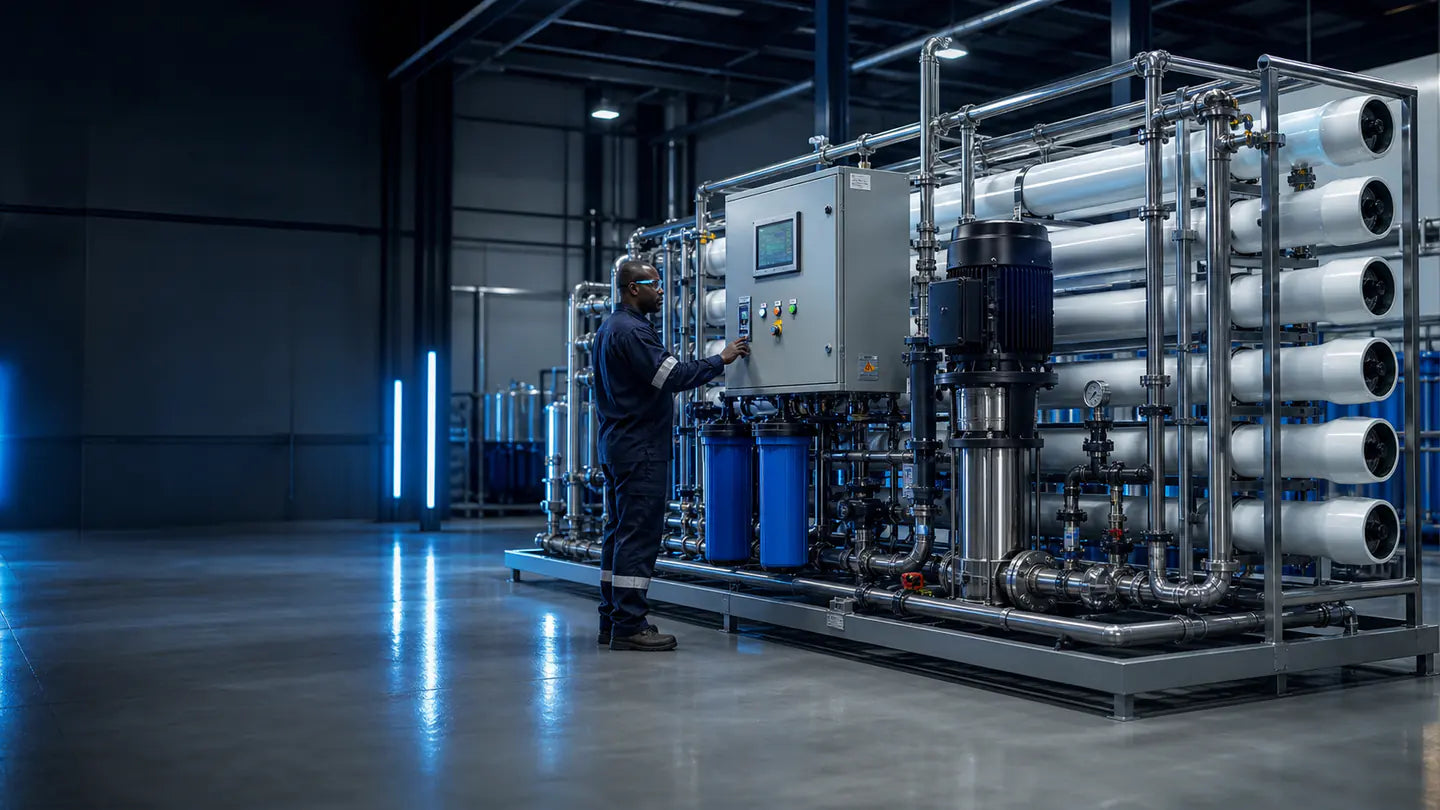
Custom-designed RO systems from 250 LPH to 250,000 LPH for businesses, factories, mines, hospitals, farms, municipalities and water shops.
Engineered capacity
250—250,000litres per hourWater problems rarely stay in the water. They show up as scale, corrosion, rejected product, cleaning time, chemical spend, blocked equipment and inconsistent quality. RO addresses the dissolved load while a complete treatment train handles the contaminants around it.
Calcium and magnesium create scale on heat exchangers, nozzles and boilers.
Ca²⁺Dissolved salts affect taste, process consistency and equipment performance.
Na⁺Chlorine, organics and dissolved minerals can make water unpleasant to use.
Cl₂Mineral deposits increase cleaning cycles, downtime and energy consumption.
CaCO₃Groundwater may carry iron, manganese, hardness, salts and microbes.
Fe²⁺Unsafe microbiological loads need a properly designed disinfection barrier.
E. coliStaining, metallic taste and blocked filters can disrupt operations.
Fe/MnBrackish or seawater requires pressure, membrane and recovery engineering.
NaClWe combine source analysis, pre-treatment, membrane separation, disinfection, storage and distribution into a practical operating system.
Explore each stage of a professionally designed reverse osmosis system.
Selected stage / Feed
Municipal, borehole, surface, brackish and seawater sources behave differently. A laboratory analysis establishes TDS, hardness, iron, silica, pH, turbidity and microbiology before the system is sized.
Output: a treatment design basis, recovery target and operating envelope.Osmosis naturally moves water through a semi-permeable membrane toward a more concentrated solution. Reverse osmosis applies pressure in the opposite direction, allowing water molecules to pass while most dissolved salts and many other contaminants stay behind.
The process creates two streams: purified permeate for use, and a more concentrated reject stream that carries separated salts away. The right recovery balances water efficiency with scale control and membrane life.
From a kitchen tap to a 250,000 LPH industrial plant, the capacity changes—but good engineering still starts with the water analysis and the end use.
Find your starting size →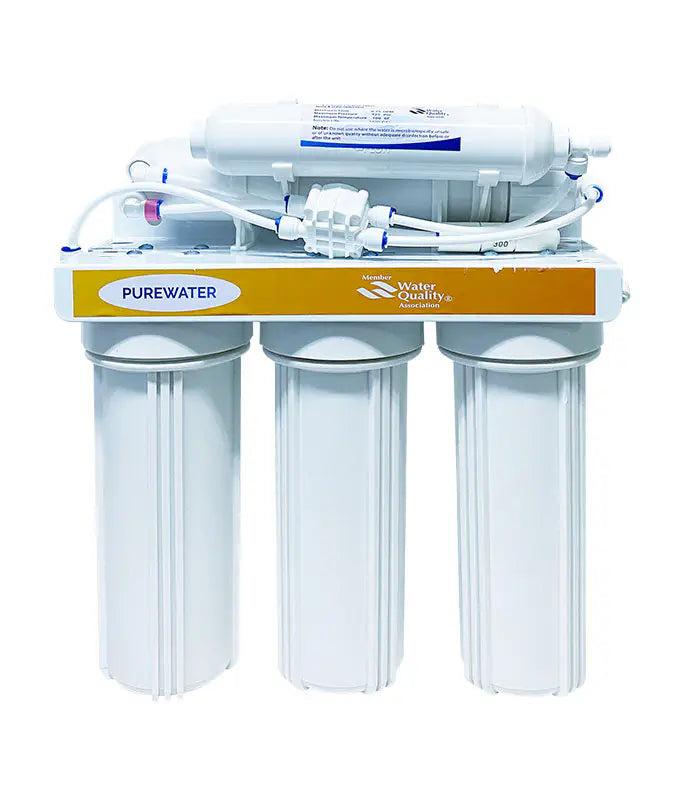
50–100 GPD
A domestic RO system creates a dedicated supply of purified drinking and cooking water at the kitchen tap. It is normally installed below the counter and stores permeate in a compact pressure tank.
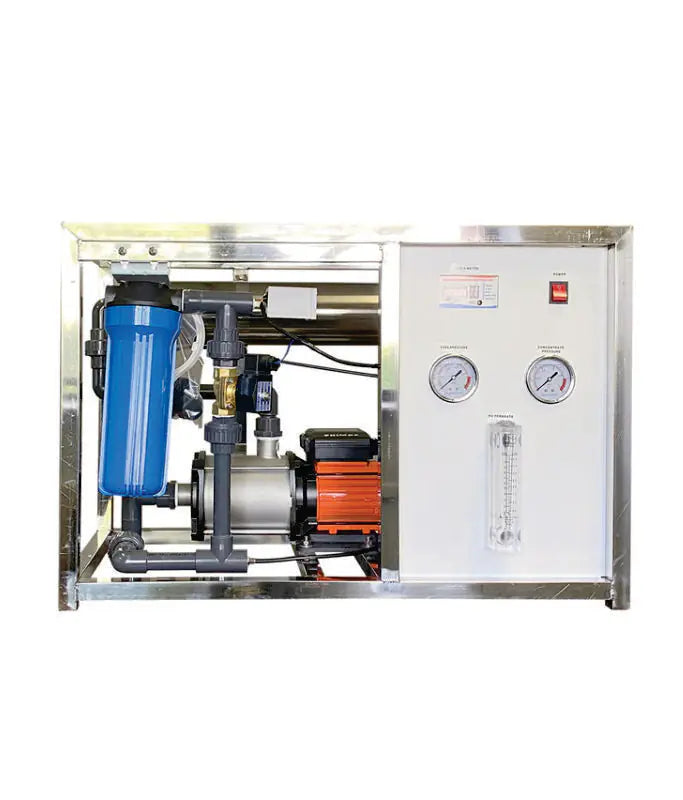
250–5,000 LPH
Commercial plants bridge the gap between small point-of-use systems and continuous industrial production. They are configured around peak demand, storage volume and the hours available for production.
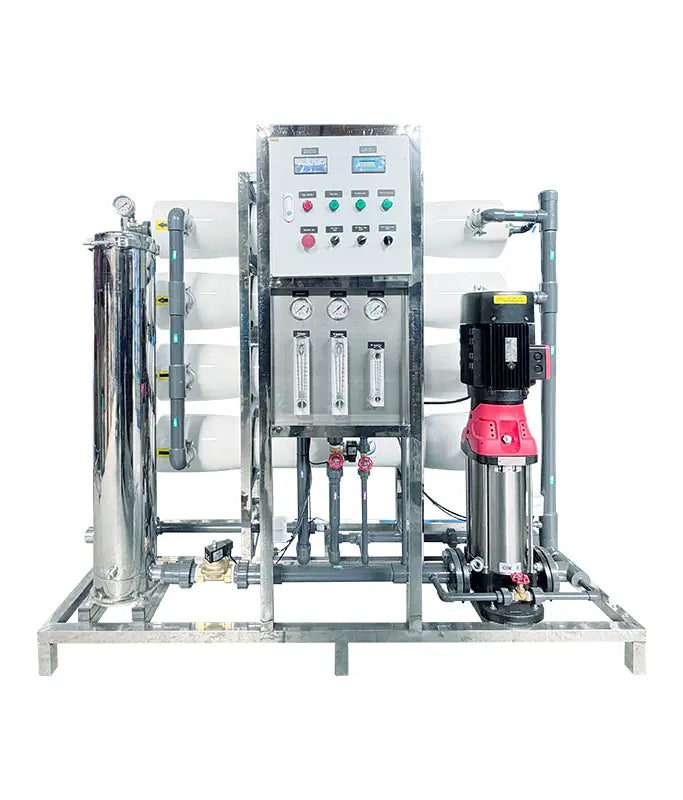
5,000–250,000 LPH
Industrial RO is an engineered process plant rather than a standalone filter. Feed chemistry, membrane flux, recovery, materials, redundancy and cleaning strategy are designed together for dependable production.
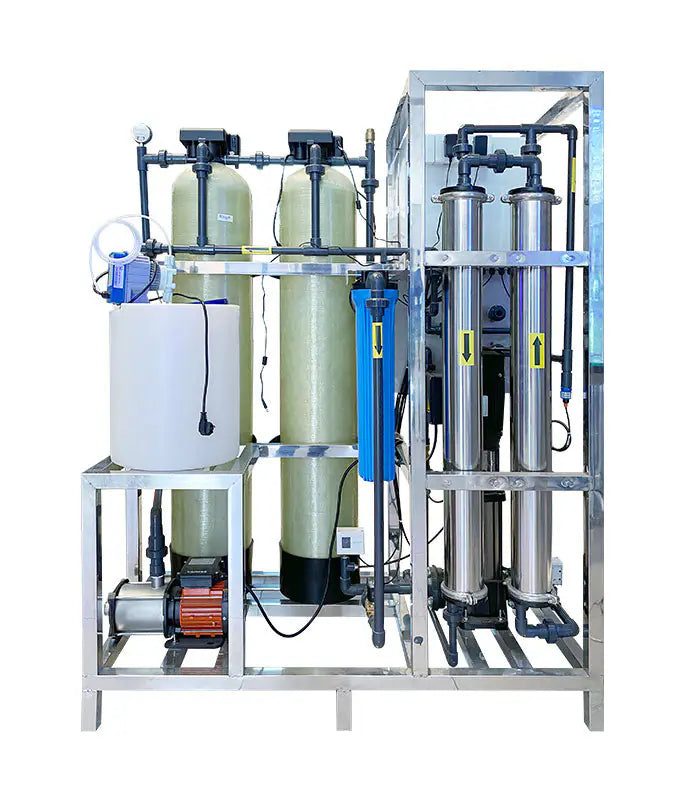
Turnkey & mobile
Containerisation places the treatment train, controls and service environment inside a secure enclosure. Factory assembly reduces site work and creates a repeatable solution for remote or rapidly changing operations.
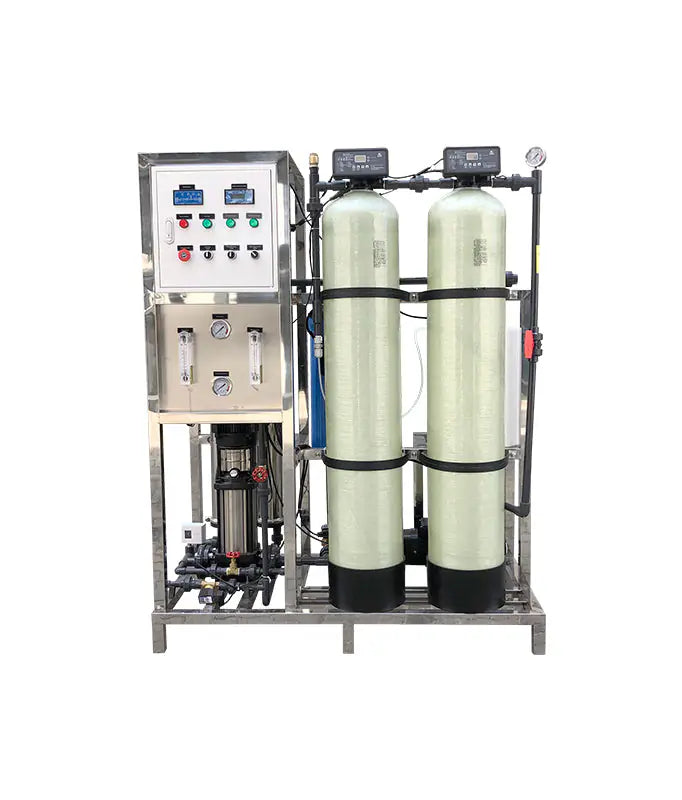
Analysis-led design
Borehole water can look clear while carrying dissolved minerals and microbiological risks. A laboratory report is used to sequence oxidation, filtration, softening, RO and disinfection correctly.
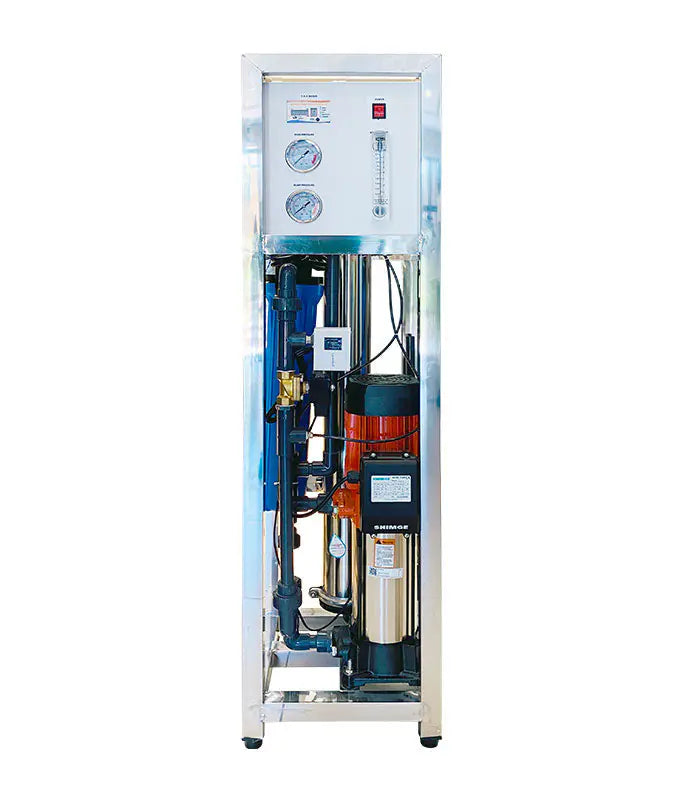
Engineered recovery
Brackish-water RO treats feeds with a higher dissolved-salt load than typical municipal water but lower salinity than seawater. Recovery and pressure are modelled against the exact ionic analysis.
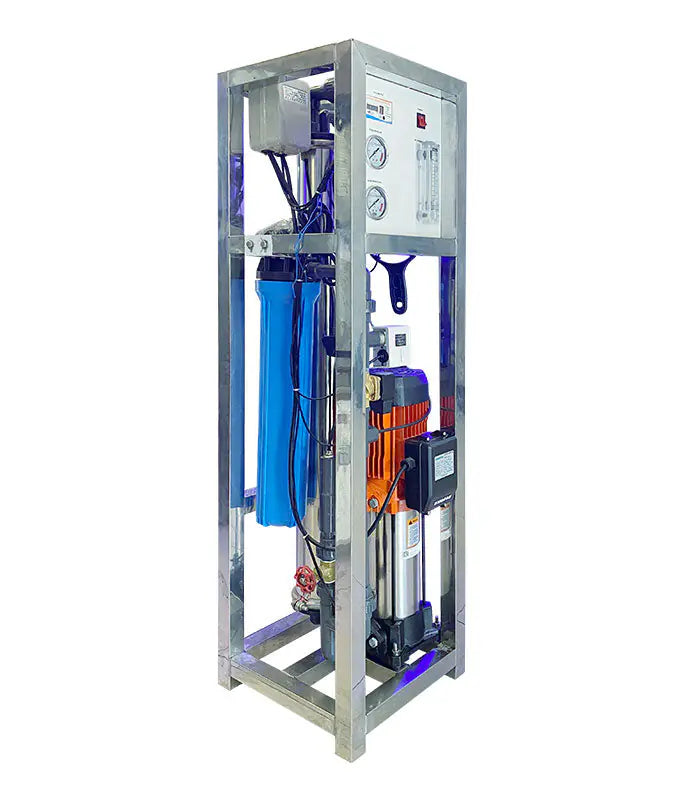
SWRO systems
Seawater RO operates at substantially higher pressure and requires robust intake, pre-treatment and corrosion-resistant materials. The design must remain stable as temperature, turbidity and coastal conditions change.
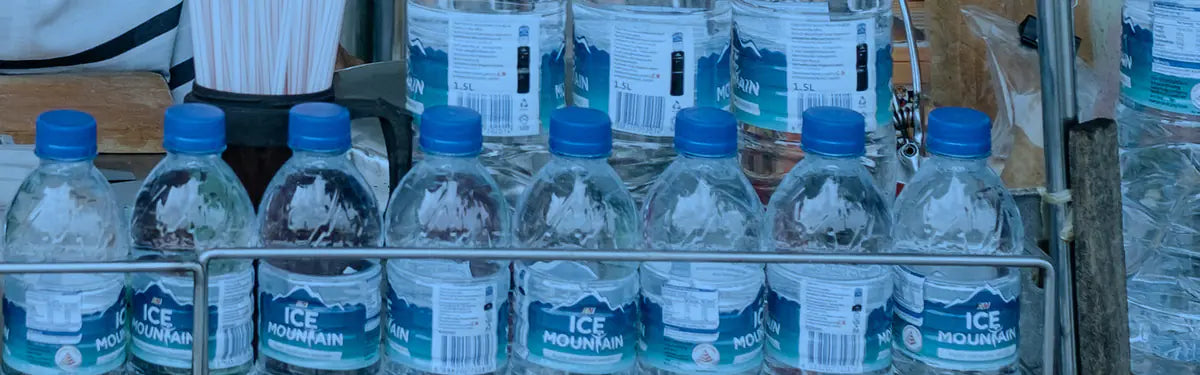
Purify • Bottle • Sell
A successful water shop needs a coordinated production and filling workflow. RO output, storage, bottle handling and peak customer demand are sized as one operating system.
Quality targets, duty cycles and operating risk change by industry. Your system should too.
 01
01Camp water, process reuse and saline feeds
 02
02Ingredient water and wash-water consistency
 03
03Reliable utility and specialist water duties
 04
04Guest water, kitchens, laundry and boilers
 05
05Low-conductivity feed for further polishing
 06
06Spot-free rinse and water reuse support
 07
07Modular community water production
 08
08Source-specific groundwater treatment
 09
09Irrigation, livestock and packhouse water
 10
10Process, boiler and equipment protection
 11
11Safe, practical drinking-water systems
 12
12Centralised water for mixed-use sites
A generic skid may make water on day one. A dependable plant is configured around source chemistry, production demand, site utilities, operator capability and long-term support.
Discuss your application ↗This illustrative borehole/brackish-water profile shows how a complete RO train can transform difficult feed water into a controlled treated-water target.
Give us five planning inputs and receive a sensible starting point. A specialist will still validate it against your water analysis and operating schedule.
 Purify • fill • sell
Build a neighbourhood water shop or a higher-volume bottling operation with one coordinated equipment plan. We help connect production capacity to storage, filling speed, premises, packaging and expected demand.
From open-skid factory plants to self-contained container systems, the physical layout is engineered around access, environment, maintenance and production continuity.
01Borehole feed • Remote operation
02PLC control • Duty/standby design
03Secure • Modular • Deployable
04Purification • Storage • Filling
Every decision gets easier when the water, duty and project scope are defined in the right order.
Define the source, demand, quality goal and commercial constraints.
Test the parameters that control treatment selection and membrane performance.
Size pre-treatment, RO, polishing, storage, controls and distribution.
Receive scope, capacity, exclusions, lead time and commercial options.
Factory configure the skid, instrumentation, pipework and control panel.
Connect the plant to prepared feed, drain, power, storage and delivery points.
Set flows and pressures, verify quality and train the operating team.
Plan consumables, servicing, troubleshooting and performance checks.
“Excellent service. We were taken through the whole process with ease and calmness.”
Public customer reviewSouth Africa
✓“Good prices and good advice—you can’t go wrong.”
Public customer reviewSouth Africa
✓“Very helpful and great customer service.”
Public customer reviewSouth Africa
✓Still deciding what matters? A short call can often identify the right next step: a water analysis, a site assessment or an initial capacity estimate.
Speak to a specialist →RO system price depends on feed-water quality, required litres per hour, daily operating time, automation, pre-treatment, storage and installation. A water analysis and duty profile let us quote the right plant instead of an undersized generic unit.
Yes. RO is effective for many borehole-water problems, especially high dissolved salts. Iron, manganese, hardness, turbidity and bacteria usually require carefully selected pre-treatment before the RO membrane.
Membrane life varies with source-water quality, pre-treatment, recovery, cleaning and operating hours. Well-managed plants commonly run for several years before replacement, while poor pre-treatment can shorten that life substantially.
Every RO system produces permeate and a concentrate stream. Recovery depends on the feed chemistry, membrane configuration and application. The concentrate may sometimes be reused for suitable non-potable duties after an engineering review.
Energy demand is mainly driven by feed pressure and flow. Brackish-water plants require less pressure than seawater desalination. Efficient pumps, correct pipe sizing and sensible recovery targets reduce operating cost.
RO membranes form a strong separation barrier, but a complete potable-water system should not rely on RO alone for microbiological safety. Correct pre-treatment, hygienic storage and a validated UV or other disinfection stage are normally considered.
A compact commercial unit may be installed quickly once the site is ready. Larger custom plants require design, manufacture, utilities, storage, civil work and commissioning. Your quotation should define the programme and site requirements.
Yes. The solution can include nationwide delivery, installation, commissioning and technical support. Site access, travel, utilities and regional service requirements are confirmed during quotation.
Tell us where your water comes from and how much you need. We'll help turn that into a practical treatment and capacity plan.